

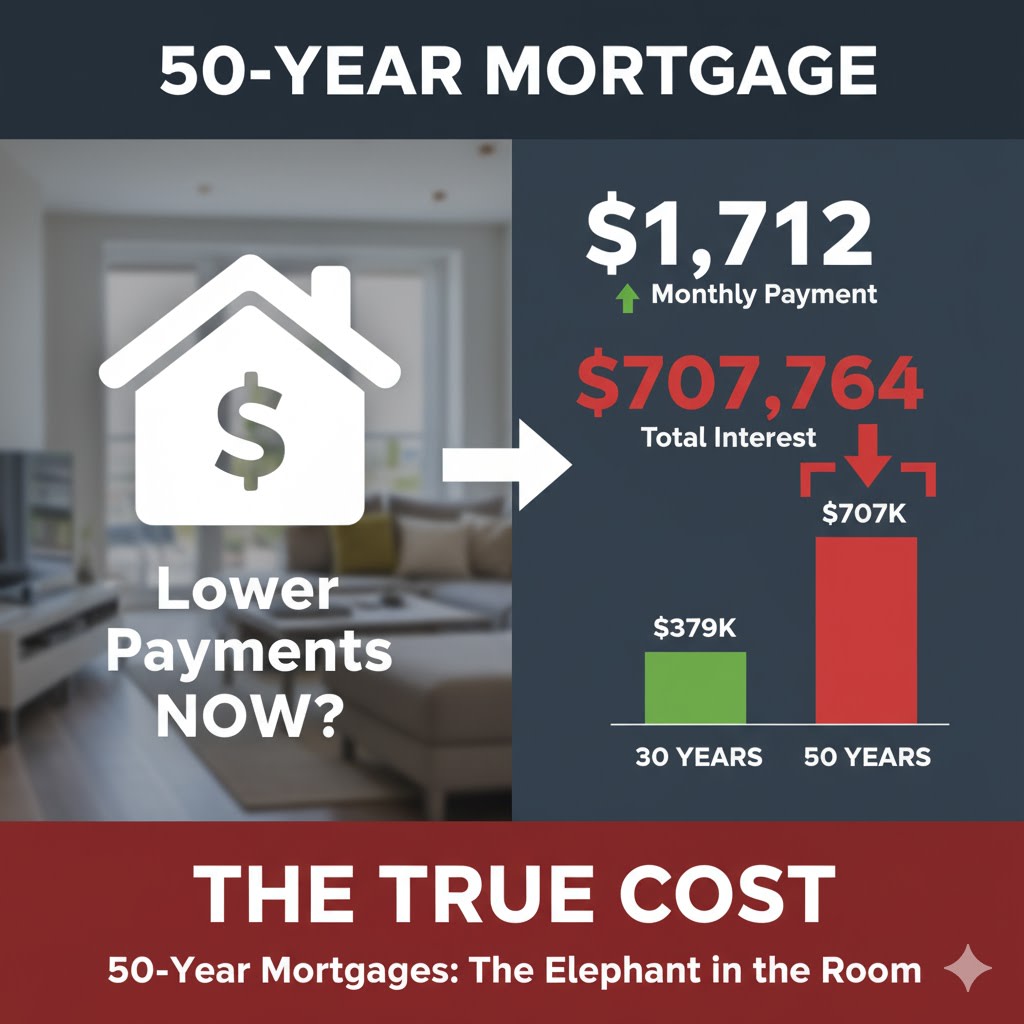

The Elephant in the Room is Stomping!
There’s an elephant in the room, and it’s stomping around looking for attention. Let’s give it to him. Today, we’re going to talk about the thing on everyone’s mind: How will 50-year mortgages affect the housing market and the affordability of houses?
Let’s break down the core issue.
Setting the Scene: The Car Loan Trap
Before we jump into the mortgage plan, let’s use a familiar example to illustrate the power of loan term and interest—the same two forces that will impact the housing market.
Imagine your car's engine is failing. Replacing it is costly, so you decide to use that money as a down payment for a new vehicle instead.
The average new car price in the U.S. is $50,000 (per Kelly Blue Book).
The average interest rate is 9.09% (ranging from 5.18%to 15.81% based on credit score, per Experian).
There are many factors that determine how much it will cost to replace an engine, but we will go with $3000. Instead of putting it into the failing car you decide to put that money down on a new car. You trade in your old car as well and the dealer gives you $10,000 for it. You now have put $13,000 down on your car, given your contribution and the trade-in value.
The main strategy people use to afford a new car is increasing the loan term to reduce the monthly payment. Let’s look at the actual cost of a standard 5-year term:
Financial Detail | Value |
Car Price | $50,000 |
Down Payment & Trade-in | $13,000 |
Principal Loan Amount (Borrowed) | $37,000 |
Interest Rate (APR) | 9.09% |
Loan Term | 60 months (5 years) |
5-Year Term (60 Months) Breakdown
Metric | Calculation | Result |
Monthly Payment | - | $769.68 |
Total Payments | $769.68 x $60 | $46,180.80 |
Total Interest Paid | $46,180.80 - $37,000 | $9,180.80 |
The Problem: Interest and Depreciation
The core problem here is the interest. Over five years, you paid $9,180.80 just for the privilege of borrowing the money, which is more than 24% of the original principal.
Meanwhile, that asset is depreciating significantly. According to Experian, cars only retain about 45% of their original value after five years. Your $50,000 car is now only worth around $22,500.
You committed to a long term, paid high interest, and now own an asset worth less than half of what it cost. This same trade-off, magnified tenfold, is the core issue facing the housing market if 50-year mortgages become common.
The Housing Market Dilemma
Let’s look at the housing numbers:
The national median home price is hovering around $410,800 (per the National Association of Realtors, NAR).
The median age of first-time home buyers is 40, and the share of first-time home buyers has dropped to a historic low of 21% (based on NAR's 2025 Profile of Home Buyers and Sellers).
Current average interest rates for fixed mortgages:
30-year fixed: 6.12% to 6.34%
15-year fixed: 5.50% to 5.64%
20-year fixed: approximately 5.99%
(Figures based on CBS News information.)
Let’s look at the most common home loan—the 30-year fixed mortgage—and compare it to a 50-year term.
The Standard 30-Year Mortgage
Scenario | Detail | Value |
Home Price | - | $400,000 |
Down Payment (20%) | - | $80,000 |
Borrowed Amount | - | $320,000 |
Interest Rate | 6.12% | - |
Loan Term | 30 years | - |
30-Year Term Results | Value |
Monthly Payment | $1,943.23 |
Total Interest Paid | $379,595.20 |
With a 30-year loan, you pay $59,595.20 more in interest than the $320,000 you borrowed. You'd be paying until you are 70 if you started at 40.
The Proposed 50-Year Mortgage
Using the same initial figures ($320,000 borrowed at 6.12% over 50 years):
50-Year Term Results | Value |
Monthly Payment | $1,712.94 |
Total Interest Paid | $707,764.00 |
The Trade-Off
Metric | 30-Year Loan | 50-Year Loan | Difference |
Monthly Payment | $1,943.23 | $1,712.94 | Saves $230.29/month |
Total Interest Paid | $379,595.20 | $707,764.00 | Costs $328,168.80 more |
The 50-year option saves you $230.29 per month, or $2,763.48 per year, but comes at an eventual cost of an extra $328,168.80 in interest—more than double the interest of the 30-year loan. If you buy this house at 40, you’ll be paying until you are 90.
Conclusion and Professional Advice
We here at Dutchess Country Realty do not write mortgages, and you should always check with your lender about changes in rates and what type of loan will work best for you.
That being said, with a combined 56 years of experience in this business, we do not believe that the 50-year fixed-rate mortgage is the answer to making homes more affordable.
Buying a home can seem scary and far out of reach, but it isn’t as exclusive as you think. The positive side of homes is they don't depreciate like cars; they often appreciate. You can also get out of a home and loan and potentially make money.
Work with professionals you can trust to get the deal that is best for you, and please, try and avoid getting a 50-year fixed mortgage.